
University Overview
Clark Atlanta University (CAU) is a prestigious historically black university (HBCU) known for its commitment to academic excellence, social responsibility, and fostering leadership. Established in 1988 by the consolidation of Atlanta University (founded in 1865) and Clark College (founded in 1869), CAU has a long-standing tradition of empowering students through education, research, and community engagement.
CAs a leading institution, CAU is at the forefront of advancing the field of cybersecurity research. Our mission is to prepare the next generation of cybersecurity professionals who are equipped with the skills and knowledge to address the evolving challenges in the digital world. Our university fosters an environment of innovation, collaboration, and interdisciplinary research, ensuring that our students and faculty remain at the cutting edge of technology and cybersecurity.
CAt CAU, we are deeply committed to making a significant impact in the world through our research initiatives, partnerships, and dedication to solving real-world problems. Our faculty are not only educators but also active researchers who contribute to groundbreaking advancements in cybersecurity, artificial intelligence, and data science. We strive to create a diverse and inclusive community where every student can thrive, and we take pride in our role as a catalyst for change and progress in the field of cybersecurity.
Cybersecurity Program Details
Clark Atlanta University offers a comprehensive suite of cybersecurity programs designed to prepare students for leadership roles in this critical field. Our programs are housed under the Department of Cyber-Physical Systems, which is dedicated to integrating cutting-edge technology with innovative research to address complex cybersecurity challenges.
Ph.D. in Computer Science (Cybersecurity Track):
Our Ph.D. program in Computer Science with a specialization in Cybersecurity is designed for students who wish to pursue advanced research in cybersecurity. This program emphasizes a deep understanding of the theoretical and practical aspects of cybersecurity, including cryptography, network security, secure software development, and cyber-physical systems. Doctoral candidates engage in rigorous research that contributes to the academic and professional cybersecurity community. Our Ph.D. graduates are prepared for careers in academia, industry, and government, where they can lead the development of new cybersecurity strategies and technologies.
Bachelor of Science in Cybersecurity:
The Bachelor of Science degree in Cybersecurity at CAU provides undergraduates with a solid foundation in the principles and practices of cybersecurity. The curriculum covers a broad range of topics, including ethical hacking, digital forensics, cyber law, and risk management. Students gain hands-on experience through labs, internships, and collaborative projects, ensuring they are well-equipped to enter the workforce as skilled cybersecurity professionals. Our graduates are prepared to take on roles such as cybersecurity analysts, network security engineers, and information security officers in various sectors, including finance, healthcare, and government.
Curriculum and Learning Environment:
Both our undergraduate and graduate programs are designed to be dynamic and responsive to the rapidly changing landscape of cybersecurity. Our curriculum is continuously updated to reflect the latest trends, threats, and technologies in the field. We emphasize experiential learning, encouraging students to apply theoretical knowledge to real-world problems through research projects, internships, and industry partnerships. CAU's state-of-the-art labs and facilities provide students with access to the latest tools and technologies used in cybersecurity, enhancing their learning experience.
Research Opportunities:
At CAU, students are encouraged to engage in research from the beginning of their academic journey. Our faculty are involved in a wide range of research projects funded by government agencies, private industry, and research institutions. Topics include artificial intelligence in cybersecurity, blockchain security, cloud computing security, and the development of secure systems for critical infrastructure. Students have the opportunity to work alongside faculty on these cutting-edge projects, gaining valuable experience and contributing to the advancement of cybersecurity knowledge.
In summary, Clark Atlanta University's cybersecurity programs are designed to cultivate the next generation of cybersecurity leaders who will safeguard the digital world and contribute to the ongoing fight against cyber threats. Whether pursuing a Ph.D. or a Bachelor of Science degree, our students are equipped with the knowledge, skills, and experience needed to excel in this vital and fast-paced field.
Faculty Profiles
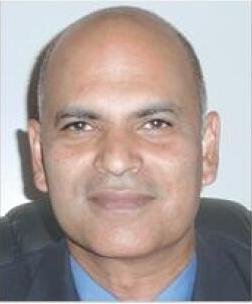
Dr. Roy George
Title: Professor and Department Chair
Department: Cyber-Physical Systems
Qualifications: Ph.D. in Computer Science, CISSP
Research Interests: Network Security, Cyber Threat Intelligence, Machine Learning in Security
Contact:
- Email: rgeorge@cau.edu
- Phone: 404-880-6945
Publications: Click Here

Dr. Kishor Gupta
Title: Assistant Professor
Department: Cyber-Physical Systems
Qualifications: Ph.D. in Computer Science, CISSP
Research Interests: Network Security, Cyber Threat Intelligence, Machine Learning in Security
Contact:
- Email: kgupta@cau.edu
- Phone: 404-880-6728
Publications: Click Here
Dr. Jane Smith
Title: ---
Department:
---Qualifications: ---
Research Interests: ---
Contact:
- Email: ---
- Phone: ---
Publications: Click Here
Cybersecurity-Related Research Activities
Clark Atlanta University (CAU) is deeply committed to advancing the field of cybersecurity through innovative and impactful research. Our faculty and students are actively engaged in a variety of cutting-edge research projects that address some of the most pressing challenges in cybersecurity today. Our research initiatives are designed to push the boundaries of current knowledge and develop new technologies and methodologies that can be applied in real-world scenarios.
AI-Driven Cybersecurity Solutions:
At CAU, we are exploring the use of artificial intelligence (AI) to enhance cybersecurity defenses. Our research in this area focuses on developing AI algorithms that can detect and respond to cyber threats in real-time. By leveraging machine learning and deep learning techniques, we aim to create adaptive systems that can predict and prevent cyberattacks before they occur. This research is crucial in developing intelligent cybersecurity solutions that can keep pace with the rapidly evolving threat landscape.
Network Security:
Network security is a critical area of research at CAU. Our work in this domain involves the development of advanced techniques to secure communications across various types of networks, including wired, wireless, and cloud-based environments. We are particularly focused on designing robust encryption methods, intrusion detection systems, and network monitoring tools that can identify and mitigate security breaches. Our research also extends to securing emerging network technologies, such as 5G and Internet of Things (IoT) networks, which present unique security challenges.
Protection of Cyber-Physical Systems:
Cyber-Physical Systems (CPS) integrate computational and physical processes, making them vital to critical infrastructure such as power grids, transportation systems, and healthcare devices. CAU's research in this area is dedicated to ensuring the security and resilience of CPS against cyber threats. We are developing techniques to safeguard these systems from attacks that could disrupt operations or cause physical damage. Our research includes modeling and simulation of CPS vulnerabilities, as well as the development of defense mechanisms to protect these systems from both external and internal threats.
Privacy-Preserving Technologies:
With the increasing amount of data being collected and processed, privacy concerns have become paramount. CAU is at the forefront of researching privacy-preserving technologies that protect sensitive information while still enabling its use for analysis and decision-making. Our research includes the development of secure multi-party computation protocols, differential privacy techniques, and encrypted data processing methods. These technologies are crucial for protecting individual privacy in applications ranging from healthcare to finance, where data security is of the utmost importance.
Collaborative Research and Industry Partnerships:
CAU's research activities are not conducted in isolation. We actively collaborate with industry partners, government agencies, and other academic institutions to ensure that our research has practical applications and contributes to the broader cybersecurity ecosystem. These collaborations enable us to apply our research findings in real-world settings, providing valuable insights and solutions to the cybersecurity challenges faced by organizations worldwide.
Through our diverse research initiatives, Clark Atlanta University is making significant contributions to the field of cybersecurity. We are committed to continuing this work and to training the next generation of cybersecurity researchers who will carry forward our mission of protecting the digital world.
Partnerships and Collaborations
CAU has established strong partnerships with leading industry organizations, government agencies, and academic institutions to promote collaborative research and innovation in cybersecurity. Our partners include:
- National Security Agency (NSA): Collaborative research on cryptography and secure communications.
- IBM Security: Joint projects on enterprise security solutions and threat intelligence.
- Georgia Institute of Technology: Cooperative initiatives in cybersecurity education and research.
Research Classification
Clark Atlanta University is nationally recognized as a leading research institution and holds a prestigious classification in the Carnegie Classification of Institutions of Higher Education. This designation highlights the university's commitment to producing impactful research that addresses both societal and technological challenges. CAU is dedicated to advancing the frontiers of knowledge in various fields, with a strong focus on cybersecurity research. This classification underscores the institution’s emphasis on rigorous academic inquiry and innovation, ensuring that it remains at the forefront of national and global research efforts in cybersecurity and beyond.
Institutional Commitment
Clark Atlanta University demonstrates unwavering commitment to cybersecurity research through its robust academic programs, research centers, and partnerships. The university leadership has expressed strong support for advancing cybersecurity education and research, as evidenced by the institution's active pursuit of national designations like the Centers of Academic Excellence in Research (CAE-R). CAU’s institutional commitment is further exemplified by the resources it allocates to faculty and student research, the fostering of interdisciplinary collaboration, and its strategic partnerships with government and industry to address real-world cybersecurity challenges.
Students Engaged in Cybersecurity Research
Clark Atlanta University actively engages its students in groundbreaking cybersecurity research, offering them numerous opportunities to collaborate with faculty on cutting-edge projects. From undergraduate to doctoral levels, students participate in research addressing critical cybersecurity issues such as artificial intelligence-driven threat detection, cryptography, and securing cyber-physical systems. Through research labs, internships, and government or industry-sponsored projects, CAU students gain hands-on experience that prepares them to become leaders in the cybersecurity field. The university is dedicated to mentoring the next generation of cybersecurity professionals who are ready to tackle emerging threats in the digital landscape.
Institutional Support for Cybersecurity Research
Clark Atlanta University provides significant institutional support for cybersecurity research through its specialized research centers, state-of-the-art laboratories, and funding for research initiatives. The university has established dedicated spaces for cybersecurity research, equipped with cutting-edge technology and tools that allow faculty and students to conduct advanced research. CAU also supports faculty research by securing external grants, facilitating interdisciplinary collaboration, and fostering partnerships with leading organizations in the cybersecurity domain. This commitment ensures that the university’s researchers have the resources they need to drive innovation and make meaningful contributions to the cybersecurity field.
External Professional and Scholarly Service in Cybersecurity Research
The faculty at Clark Atlanta University are deeply involved in external professional and scholarly service within the cybersecurity research community. Many of CAU’s faculty members serve as peer reviewers for leading academic journals, contribute to national cybersecurity conferences, and participate in professional organizations such as the National Science Foundation (NSF) and the National Security Agency (NSA). Their active involvement not only enhances the university’s reputation but also ensures that CAU remains a key player in shaping the future of cybersecurity research. These contributions to the professional community strengthen the university’s engagement with national and global cybersecurity efforts.
NCAE-C Activities and CAE Community
As part of its dedication to advancing cybersecurity education and research, Clark Atlanta University is actively involved in the National Centers of Academic Excellence in Cybersecurity (NCAE-C) activities. The university collaborates with other designated institutions in the CAE Community of Practice (CAE CoP-R) to share best practices, research findings, and innovative solutions to contemporary cybersecurity challenges. CAU’s participation in NCAE-C activities not only enhances its cybersecurity programs but also helps shape national cybersecurity policies and practices. Through these collaborative efforts, the university plays a vital role in fostering a strong and capable cybersecurity workforce.
Contact Information
For more information about our cybersecurity programs and research initiatives, please contact us:
Email: rgeorge@cau.edu
Phone: +1 (404) 123-4567
Address: 223 James P. Brawley Drive SW, Atlanta, GA 30314